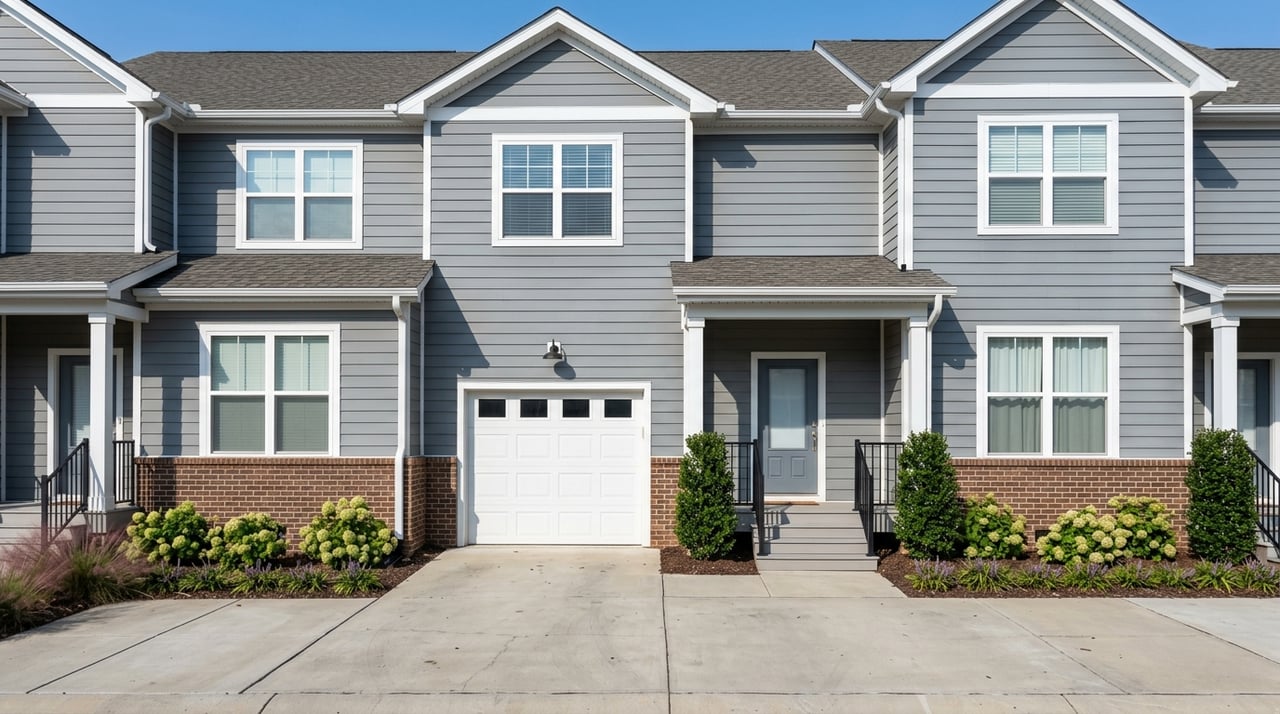
Trying to choose between a townhome and a single-family home in Hampton? You are not just picking a floor plan. You are choosing how much space you want, how much upkeep you want to handle, and how much control you want over the property. If you understand those tradeoffs before you start touring homes, you can make a much more confident decision. Let’s dive in.
Hampton market snapshot
Hampton’s housing market currently sits around the high-$200,000s to low-$300,000s. Recent market snapshots show sale and listing prices near $299,000, which puts both townhomes and single-family homes in reach for many buyers comparing value, monthly costs, and lifestyle fit.
Townhomes often come in at a lower price point. Redfin currently shows Hampton townhouses with a median listing price of about $260,000, which can make attached living appealing if you want to enter the market with a smaller upfront cost.
Single-family homes still make up most of Hampton’s housing stock. The City’s 2025-2029 Consolidated Plan reports that 63.2% of housing units are 1-unit detached, compared with 7.2% that are 1-unit attached, so detached homes remain the more common ownership style across the city.
Townhome living in Hampton
Lower-maintenance routines
A townhome often appeals to buyers who want less day-to-day exterior upkeep. In many Virginia common-interest communities, the association collects mandatory assessments to help maintain shared elements such as roads, signage, pools, or clubhouses.
That setup can simplify your routine, especially if you do not want to spend weekends handling as much outdoor work. For some buyers, that predictability is a major advantage over taking care of every exterior item on their own.
HOA structure matters
In Hampton, a townhome is also a governance choice. Virginia common-interest communities operate under association rules, and those rules can affect things like exterior changes, parking, and use of shared spaces.
That means you should look closely at resale documents before you buy. HOA dues can cover important maintenance items, but the exact coverage depends on the community’s governing documents, not on assumptions.
Smaller footprint, simpler ownership
Townhomes usually trade larger lots for convenience. Many Hampton townhome listings sit on more compact lots, which may work well if you want a smaller outdoor area and a more streamlined property to manage.
This can be a strong fit if you are a first-time buyer, downsizing, or relocating and want a home that may feel easier to maintain. For some military households, that lower-maintenance setup can be especially practical during a busy transition.
Single-family living in Hampton
More space and privacy
Single-family homes in Hampton usually offer more room inside the lot lines. Current listings show a range of lot sizes, including examples around 0.26 to 0.68 acre, which is a meaningful difference from the smaller footprint many townhomes offer.
That extra space can give you more flexibility for outdoor living, storage, gardening, pets, or future projects. If having room to spread out matters to you, a detached home often delivers more of it.
More control over the property
Detached homes usually give you greater control over the exterior. You are less likely to deal with association restrictions tied to shared property, and you may have more freedom to make changes over time.
Hampton’s zoning structure also supports a wide range of one- and two-family residential areas. Single-family homes are allowed in all 11 of those residential zones, with lower-numbered zones allowing smaller lots and higher-numbered zones allowing larger lots and bigger homes.
Long-term flexibility
If you are thinking several years ahead, detached ownership may feel more adaptable. Hampton is studying accessory dwelling unit ordinance changes for one-family lots, which suggests the city is considering more flexibility for some detached properties over time.
That does not guarantee a future use, but it does matter if you are weighing long-term possibilities. Buyers who want room for future customization often lean toward single-family homes for that reason.
Costs to compare beyond price
Purchase price and taxes
Price is only one part of the decision. Since Hampton assesses real estate at 100% of market value and the city’s real estate tax rate is $1.14 per $100 of assessed value, a higher-priced detached home will usually have a higher annual tax bill than a lower-priced townhome.
That does not automatically make a townhome cheaper overall, but it does affect your monthly ownership math. You should compare purchase price, tax exposure, and any association dues together rather than looking at one number in isolation.
Maintenance vs dues
With a townhome, you may pay HOA dues in exchange for shared maintenance and management. With a detached home, you will usually take on more responsibility for the roof, siding, landscaping, fencing, gutters, and general exterior care yourself.
A useful local example is Hampton’s Home Repair Blitz program, which helps qualifying homeowners with items like painting, debris removal, landscaping, and minor repairs to steps, gutters, and fencing. That list reflects the kinds of upkeep detached owners often need to plan for.
Parking and outdoor use in Hampton
Parking can be easy to overlook until it becomes a daily frustration. In Hampton, the city prohibits parking on front lawns where street parking is allowed, and it also limits RV and trailer parking in traditional residential lots.
Because of that, the number of driveway spaces, garage capacity, and any HOA parking rules deserve close attention. If you have multiple vehicles, a work truck, a boat, or an RV, these details may matter just as much as the square footage inside the home.
Outdoor space is another practical difference. A detached home often gives you more yard area for entertaining, storage, or hobbies, while a townhome usually compresses those benefits into a smaller footprint.
Which option fits your lifestyle?
The best choice in Hampton usually comes down to how you live, not which property type sounds better on paper. Townhomes and single-family homes serve different needs, and both can make sense depending on your goals.
A townhome may fit you well if you want:
- A lower entry price compared with many detached homes
- Less exterior maintenance in your day-to-day routine
- Shared amenities or common-area upkeep handled through dues
- A simpler setup during relocation or a busy season of life
A single-family home may fit you well if you want:
- More yard space and outdoor flexibility
- More privacy and separation from neighbors
- More room for parking and storage
- More control over exterior changes and long-term use
How to decide with confidence
When you tour homes in Hampton, try to look past the finishes for a moment. Ask yourself how you want to spend your weekends, how many cars you need to accommodate, and whether you want predictable dues or more direct control over maintenance.
It also helps to think about your timeline. If you expect to stay for only a few years and want a simpler ownership routine, a townhome may feel like the right fit. If you are planning for long-term flexibility, yard space, or future customization, a single-family home may give you more of what you need.
The right answer is rarely one-size-fits-all. It is about matching the home to your routines, budget, and plans for the future.
If you are weighing townhome vs single-family living in Hampton, working with a local advisor can help you compare the real tradeoffs clearly. Michael Morrill can help you narrow your options, understand the local market, and find the property type that fits the way you actually live.
FAQs
What is the price difference between townhomes and single-family homes in Hampton?
- Recent Hampton market snapshots place the broader market near $299,000, while Hampton townhouses currently show a median listing price around $260,000, so townhomes often offer a lower entry price.
What do HOA dues cover in Hampton townhome communities?
- In Virginia common-interest communities, mandatory assessments can pay for maintenance and improvements to shared elements such as roads, signage, pools, or clubhouses, but you should verify exact coverage in the community resale documents.
What maintenance should you expect with a single-family home in Hampton?
- Detached homeowners usually handle more exterior upkeep themselves, including items such as roofing, siding, landscaping, gutters, fencing, and general yard care.
What parking rules matter when buying a home in Hampton?
- Hampton prohibits parking on front lawns where street parking is allowed and limits RV and trailer parking in traditional residential lots, so driveway space, garage space, and HOA rules are important to review.
Can a single-family home offer more future flexibility in Hampton?
- It can, because detached homes generally provide more control over the property, and Hampton is studying ADU ordinance changes for one-family lots that may affect future flexibility depending on the final rules.
Who should consider a townhome in Hampton?
- Townhomes often suit first-time buyers, downsizers, and some military households who want lower-maintenance living and a more predictable ownership routine.